Mobilizing community-led search and rescue during hurricanes and floods
2024 + 2025



3x Award Winning
My Role
Product Strategist + Designer
Brand Designer
Motion Designer
Each year, hurricanes and floods overwhelm U.S. government emergency responders, forcing impacted communities to organize and carry out search, rescue, and emergency response themselves across disorganized networks during active disasters.
As my thesis project, I designed Buoy to help coordinate search-and-rescue efforts between ad hoc civilian responders and people in need of aid, increasing certainty and transparency that help is on the way.
Outcomes
“It feels like an app you’ve always known.”
–
Sean Cain, Director of Loyola New Orleans’ University Honors Program
Making waves
Upon its presentation, Buoy drew significant interest from external academic assessors, university entrepreneurs, potential employers, and local agencies for development.
Awards + Recognition
Constance Mui and John T. Sebastian Award for Outstanding Research in Honors
Loyola New Orleans' University Honors Program
New Talent 2025 – Logo Design, Honorable Mention
Graphis Inc.'s New Talent Awards
Design for Good Award
Loyola New Orleans' School of Communication & Design
The Need
Year after year, natural disasters overwhelm government first responders when they’re needed most.
Hurricanes and floods inundate first responders (911, US Coast Guard, National Guard) with pleas to be rescued from rising floodwaters, dangerous conditions, and medical emergencies.
Combining intense surges in call volume with everyday crime and response means many go unanswered and help may never arrive.
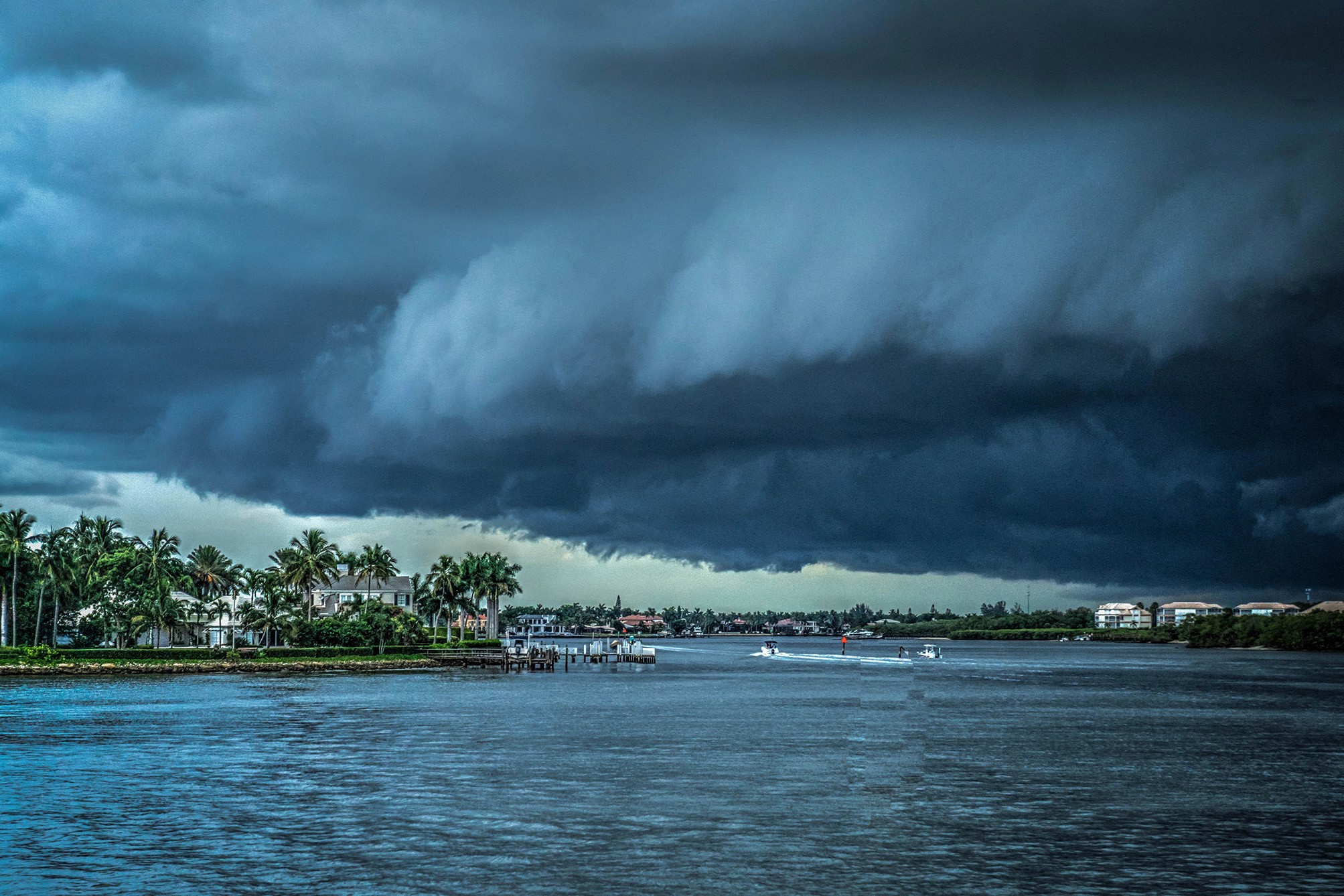
“Help is not coming from the government.”
– Jeff Masters, Ph.D., Meteorologist
The Problem
When 911 can't help, victims plead for help online, but volunteer rescuers struggle to organize for response without a central dispatch.
99% of search-and-rescue in the U.S. is volunteers. Some official, trained volunteer organizations. Lots of ad hoc rescue groups. Or, maybe just some guy with a kayak.
As a last resort, victims ("Resuees") post on social media or fill out online rescue request forms in hopes a volunteer rescuer will come to their aid.
∙ Aug 30, 2017
Someone pls send help. My dads car is stranded on the side of 1910 H.O. Mills by the city barn in Port Arther/ El Vista Mom dad me and 2yo sis #HarveySOS

How can we connect Rescuers to Rescuees, an underutilized support, for efficient and transparent rescue response?
The Research
What is it like to experience these disasters?
Though I didn't put myself in any dangerous situations for that sake of this project, growing up on the Gulf Coast, I’ve had my fair share of storms.
My Storm Stats
🌀 7 Hurricanes
🌊 A "1,000-year flood"
⛈️ Many flash floods
Beyond my own experiences, I interviewed disaster victims and watched firsthand accounts from news and social media to build a guiding "rescuee" user persona.
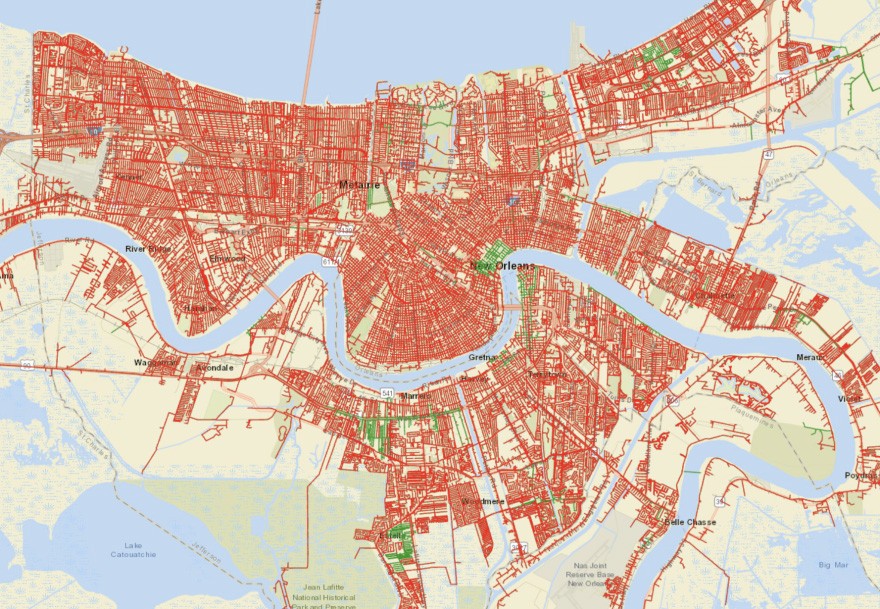
New Orleans power grid after Hurricane Ida, which I evacuated college for.
Things to keep in mind about hurricanes and floods

It’s a big waiting game
Up to 96 hours, with aftermath extending weeks.
Steady updates are crucial.
They help you stay safe and sane.
Retaining cell service and electricity is a gamble.
It all depends on the storm.
911 becomes unreliable.
Unanswered calls, signals drop, and overwhelmed responders.
Understanding the complexities of disaster search-and-rescue
Search-and-rescue (SAR) standards are scattered, so I researched on all fronts: FEMA advisories, news articles, social media, blog posts, academic papers, volunteer groups' websites (like the Cajun Navy), and conducted interviews with seasoned SAR professionals.

Collection of referenced sources
Takeaways

Not enough Rescuee information
Requests rarely include all details to efficiently coordinate a rescue.

Real info or misinformation?
Rescuers are flooded with info, making it hard to identify accurate information.

Isolated rescuer networks
Limited communication across rescue groups means teams respond to the same rescuee.
Rescuers may become the rescued
If conditions deteriorate, rescuers may need to be rescued themselves.
Competitor Audit
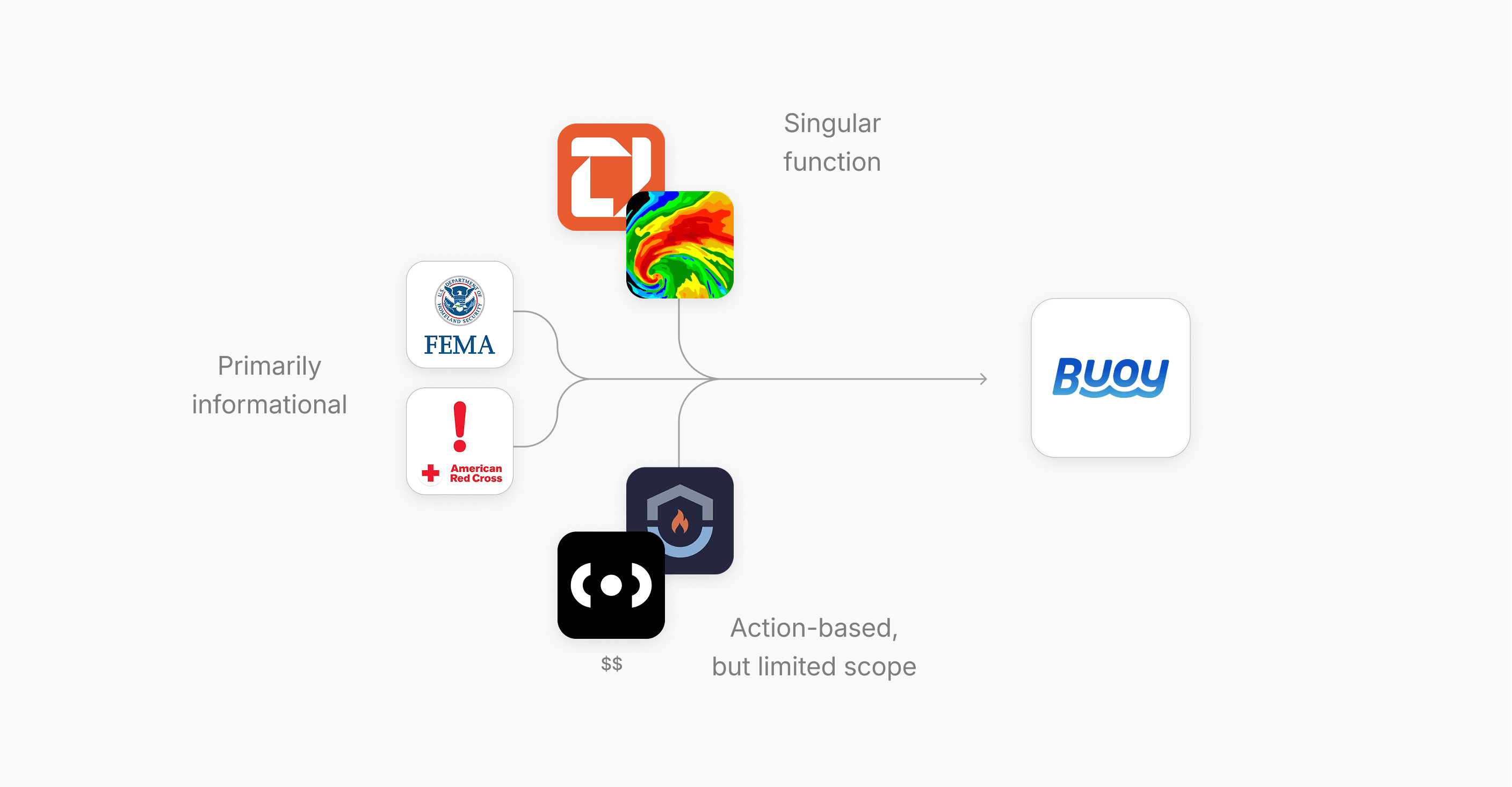
Existing emergency management tools don’t enable people to leave the unsafe conditions
Apps on the market hone in on pre- and post-disaster education, focus on one function, block critical actions behind paywalls, or have siloed communications.
Main Challenge 01
How do we collect rescuee information for rescuers without overburdening them?
Rescuees typically have a lot of time while waiting out these storms, but they don't need to be given work admist chaos. To maximize information for rescuers without overwhelming rescuees, I approached collection both directly and indirectly.
Rescuee Questionnaire – Direct
A short form before rescue request submission informs rescuers on the specifics of their unique situation.
Crowdsourced Alerts - Indirect
Alerts provided by users give responders situational awareness without overburdening anyone.
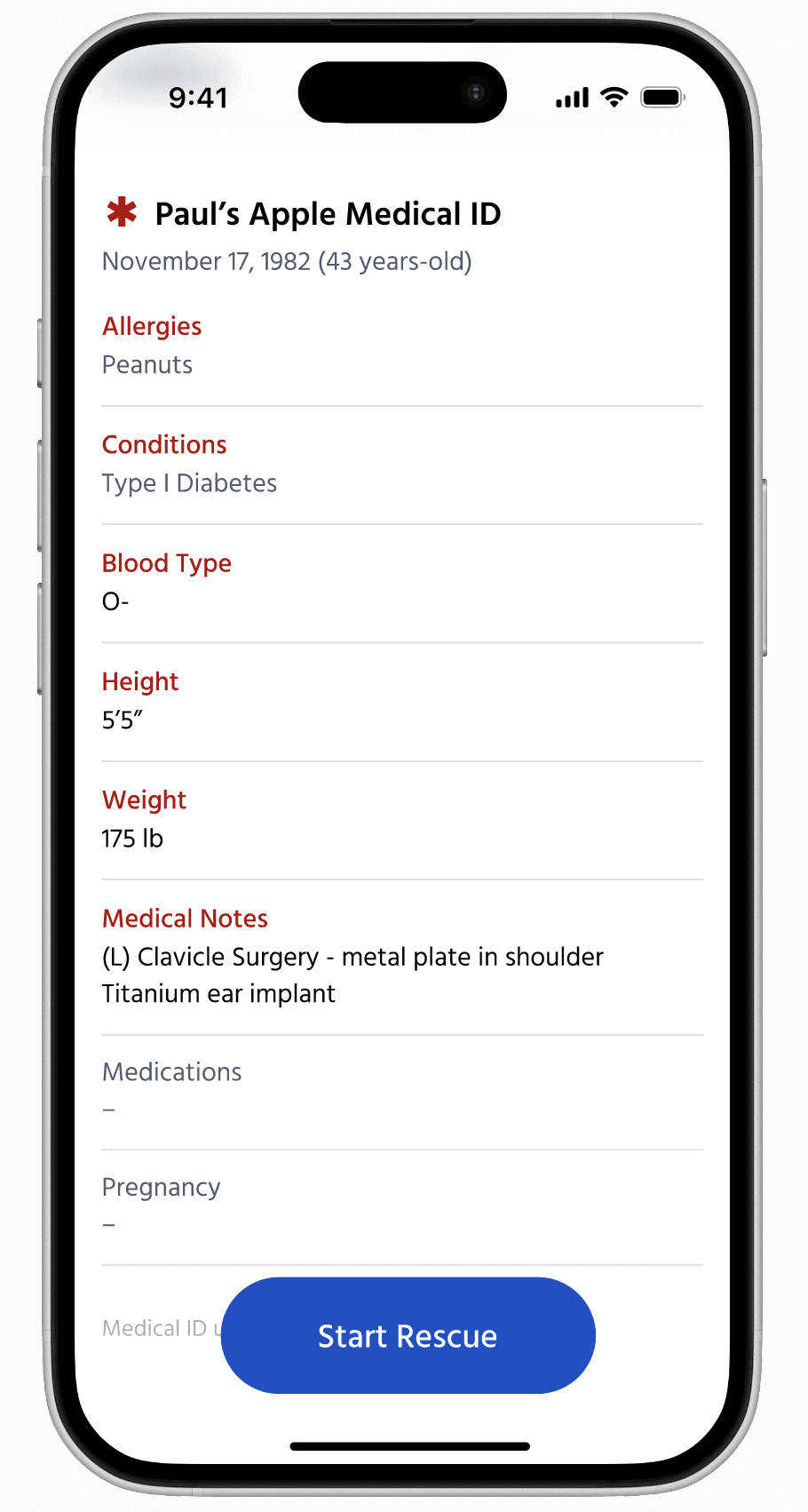
Pulling Phone Data - Indirect
Buoy pulls preferred language + medical IDs from the rescuee's phone, giving rescuers additional context automatically.
Main Challenge 02
No power. No cell service. What now?
It's pretty much a given that things won't go as planned during a disaster. While I can't stop cell towers from going down, Buoy still needs to prepare users for it by giving them offline tools and alerting both sides when either party goes off the grid.

Physically signaling for rescue
Throughout the app, users can find instructions for signaling help if their phone dies or cell service fails.
Using native SOS features
When cell service fails, Buoy directs users to native SOS features already on their device, like Apple Emergency SOS.
← Apple Satellite SOS
Initial Iterations + Testing
Making decisions after user testing
Natural disasters can affect anyone. That’s why I tested with users aged 11–55.
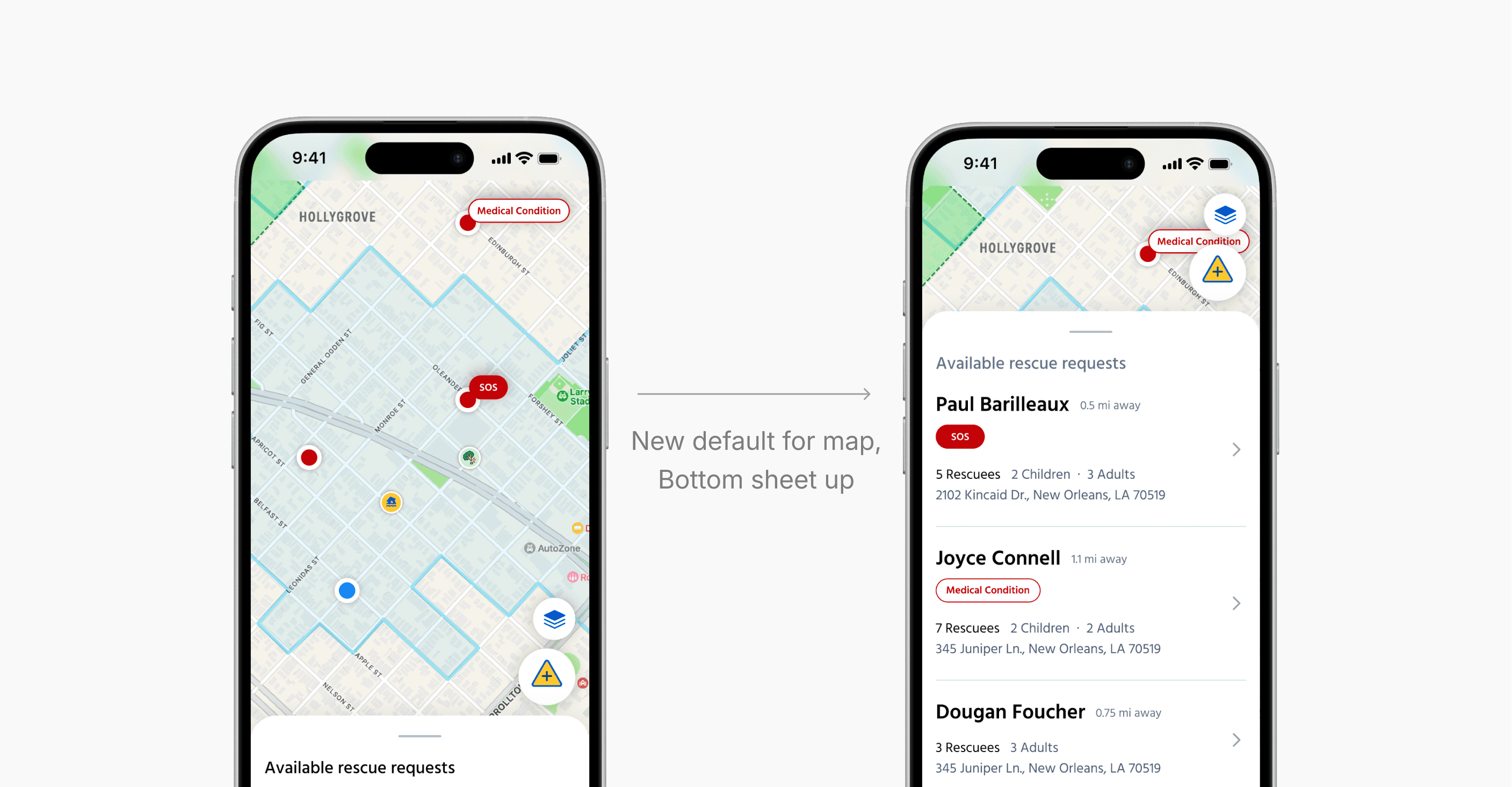
Testing revealed users overlooked the rescue requests sheet on the "landing" map, a simple fix solved by defaulting the Available Rescue Requests sheet to open.
The Final Product
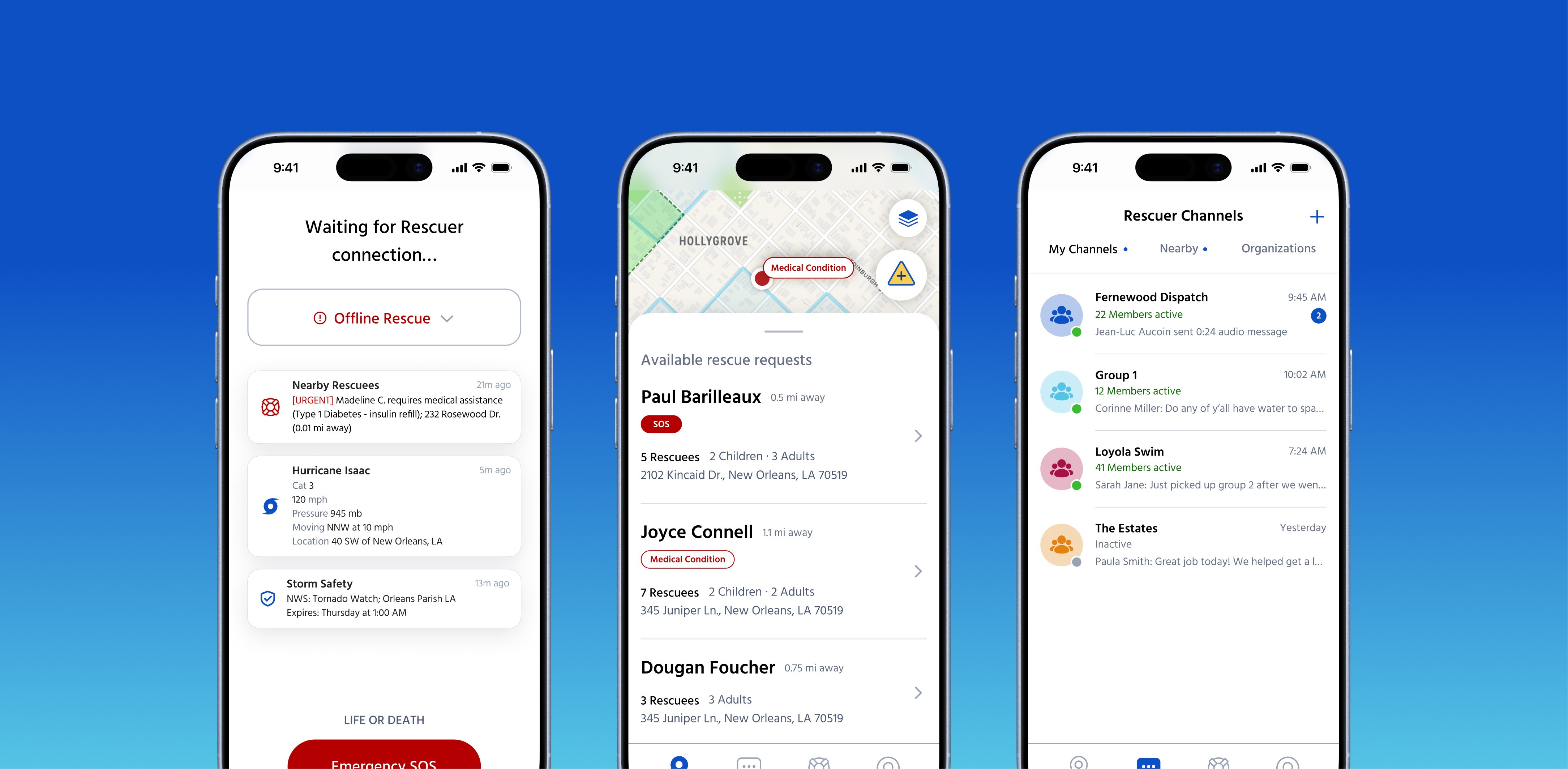
With two primary modes, Buoy serves both sides of hurricane and flood emergencies, whether you need rescuing or you're on your way to help.
Need to be rescued?
Get rescued by tapping into your community’s entire responder network
Buoy collects emergency details from rescuees and dispatches rescue requests to a network of official and volunteer responders. Once a rescuer is on the way, rescuees can track them and communicate via chat, so they always know help is coming.
Want to help rescue?
Conduct efficient rescues using with updates, rescuee navigation, and rescuer chat networks
Buoy gathers critical rescuee information upfront, coordinates local responders, and keeps rescuers and rescuees in direct contact from start to finish, freeing responders to focus on the people who need them most.
Additional Features
Watch Faces
Smartwatches give users a reliable way to access Buoy when wet screens fail them or when driving demands both hands.

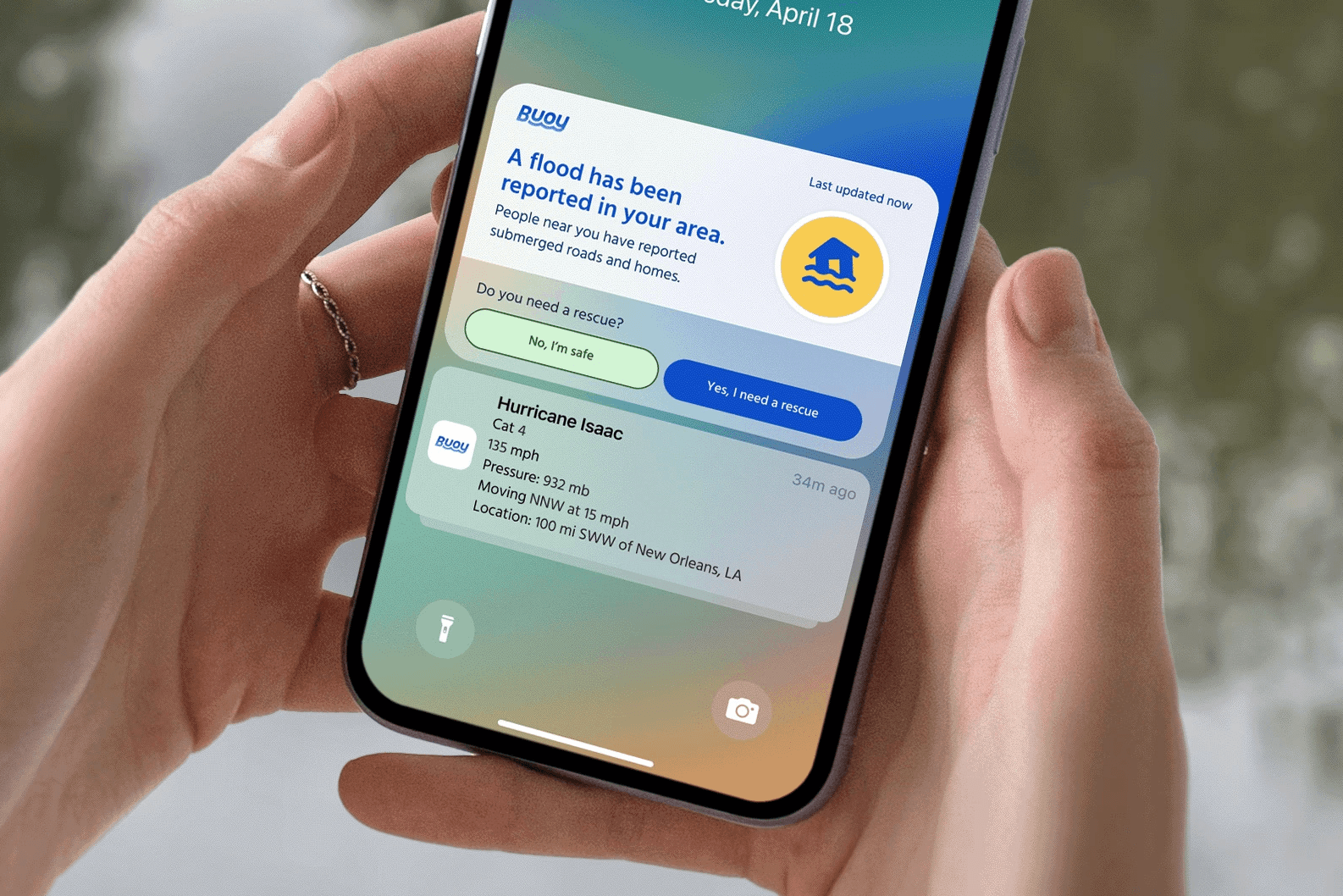
Live activities
Track rescuers, confirm rescues, and more without leaving your phone's lock screen.
Logo & Visual Identity
At the beginning of this project, I created Buoy’s brand identity (logo, type, and colors) around the idea of staying afloat upon the water.
Reflection
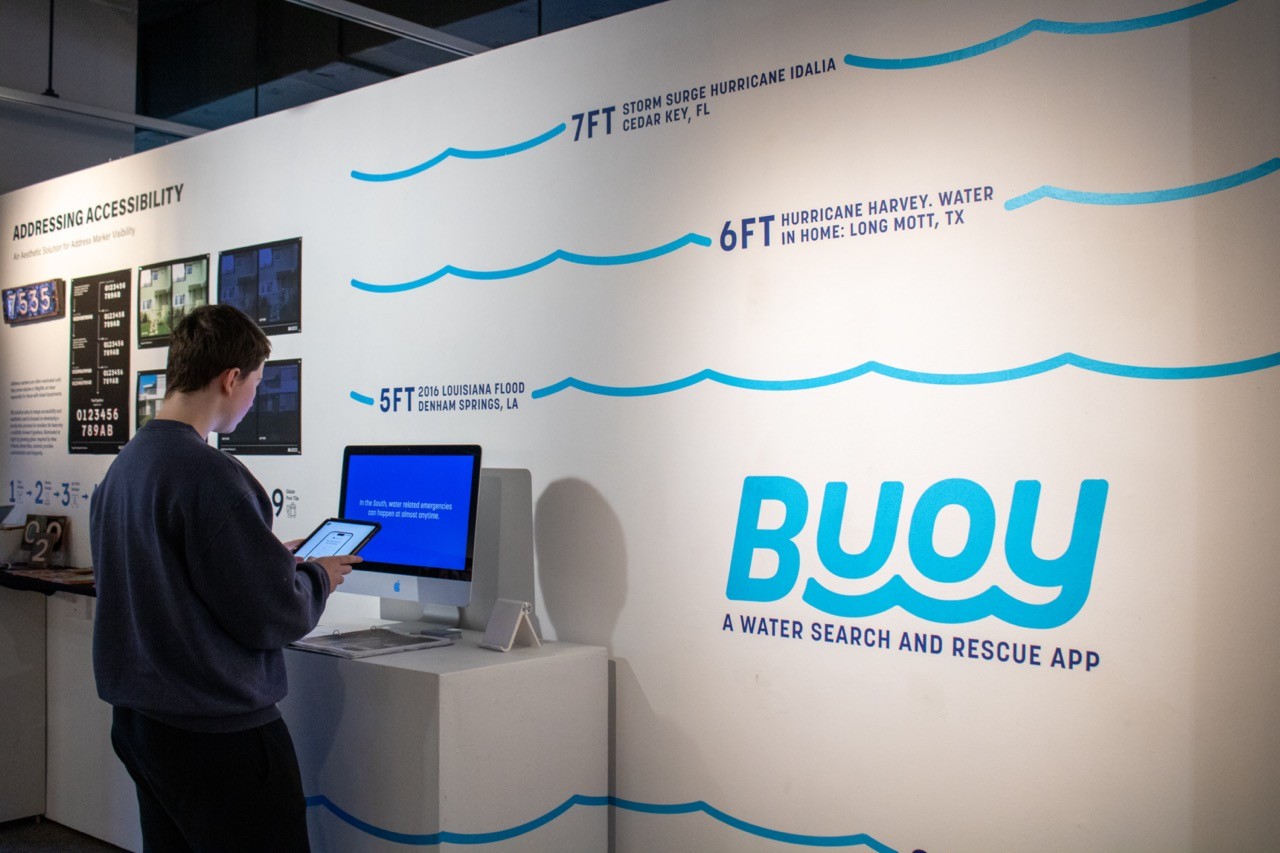
I presented Buoy at my design class’s senior capstone exhibition, “Iterate,” and Loyola University’s Honors Program Thesis poster showcase, where professors, students, and local professionals got to experience the app!
Community is powerful
To be human is to be good. To help others when the world is crashing down around us. Disaster, as tragic as it is, has a way of revealing that in us. I’ve seen it with each flood, with every hurricane. Through designing Buoy, I was proud to explore how to give my community the tools to turn their desire to help into action.
Thank you to my advisors who helped guide me through this project: Lina Lee, Scott Gericke, Jingoog Kim, Daniela Marx