Ghost with the Most
My Role
Game Systems Designer
Playtest Analyzer
Visual Designer
Team
Angel Allen
Miles Ainsworth
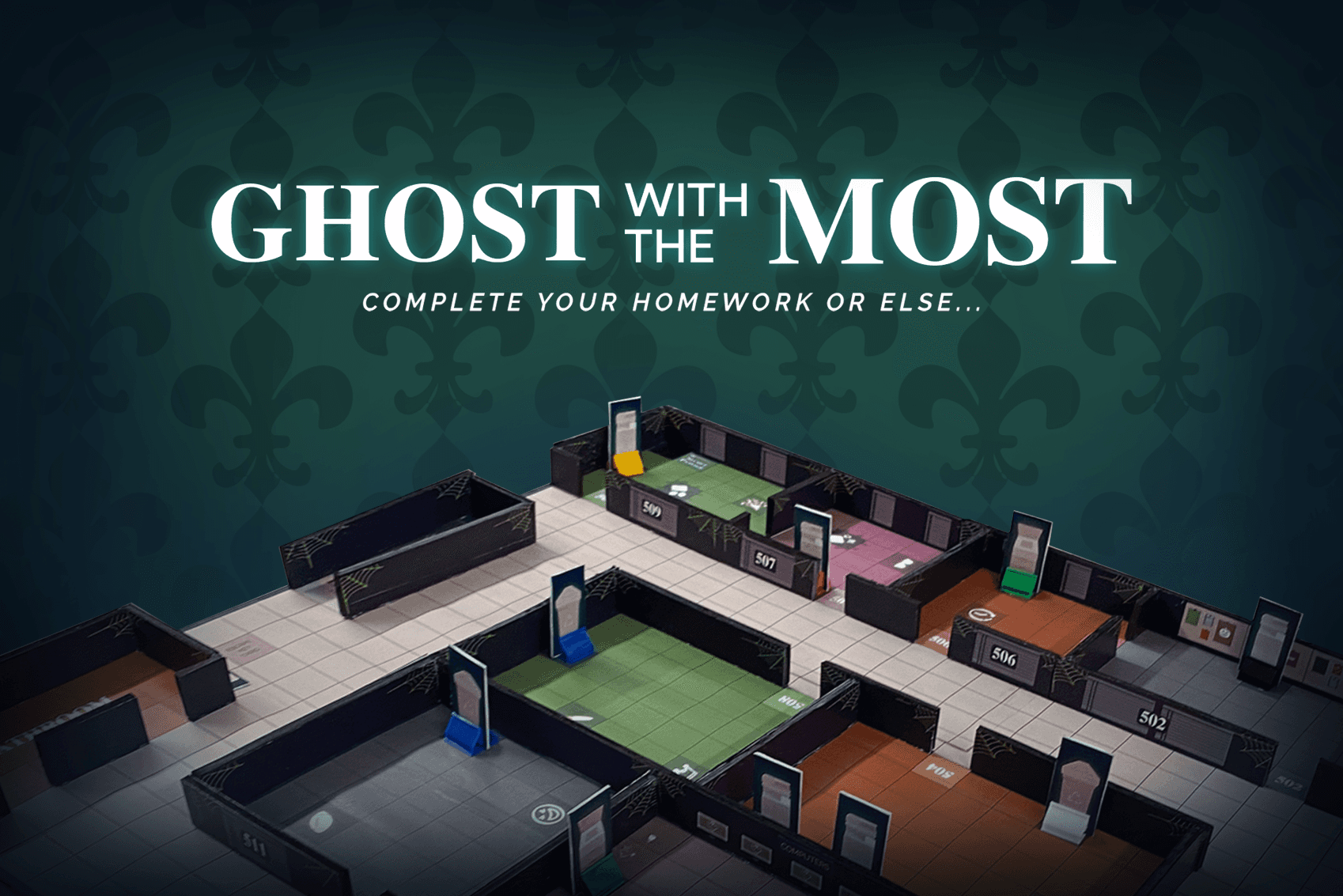
Ghost with the Most is a large-scale board game that onboards new Loyola design students to the department lifestyle, disguised as the urban legend of the ghost that haunts the school’s 5th floor.
Students play as designers trapped overnight, racing to complete assignments and escape before the ghost (another player) picks them off one by one. Along the way, they navigate the real design department floor layout and encounter the assignments and challenges that await them in later years.
Problem
First-year design students felt lost: Literally and socially.
They didn't know where classrooms were, had little connection with upperclassmen, and had no sense of what to expect from future coursework.
Solution
Disguising orientation as a game
We based the game on the department's real floor plan, using tasks that reflect actual future assignments. All tied together through a spooky, gothic New Orleans aesthetic.
Player Audience
Designed for Loyola design students but accessible to anyone. The rules require no prior knowledge, even if some details reward those in on the Loyola-related jokes.
Core Experience
Drawing inspiration for an exciting, thrilling, and chaotic gameplay
While writing the rules, we knew we wanted to create chaos: where everyone is yelling and hollering. The type of energy when your friends bring UNO, but everyone has different rules.
So we looked at games where you outmaneuver, plot against, and then conspire with your previous opponents.
Games with a "secret killer"

Werewolf

Among Us
Games where you “switch sides”

Sharks and Minnows,
(a swimming pool game)
Bringing it to life
Creating our characters and tasks
With the game being college-based, 10 possible player avatars took form as student stereotypes (Procrastinator, Student Athlete, Party Animal), each with their unique advantages and disadvantages.
Each task card was drawn from actual assignments students could expect in later years.
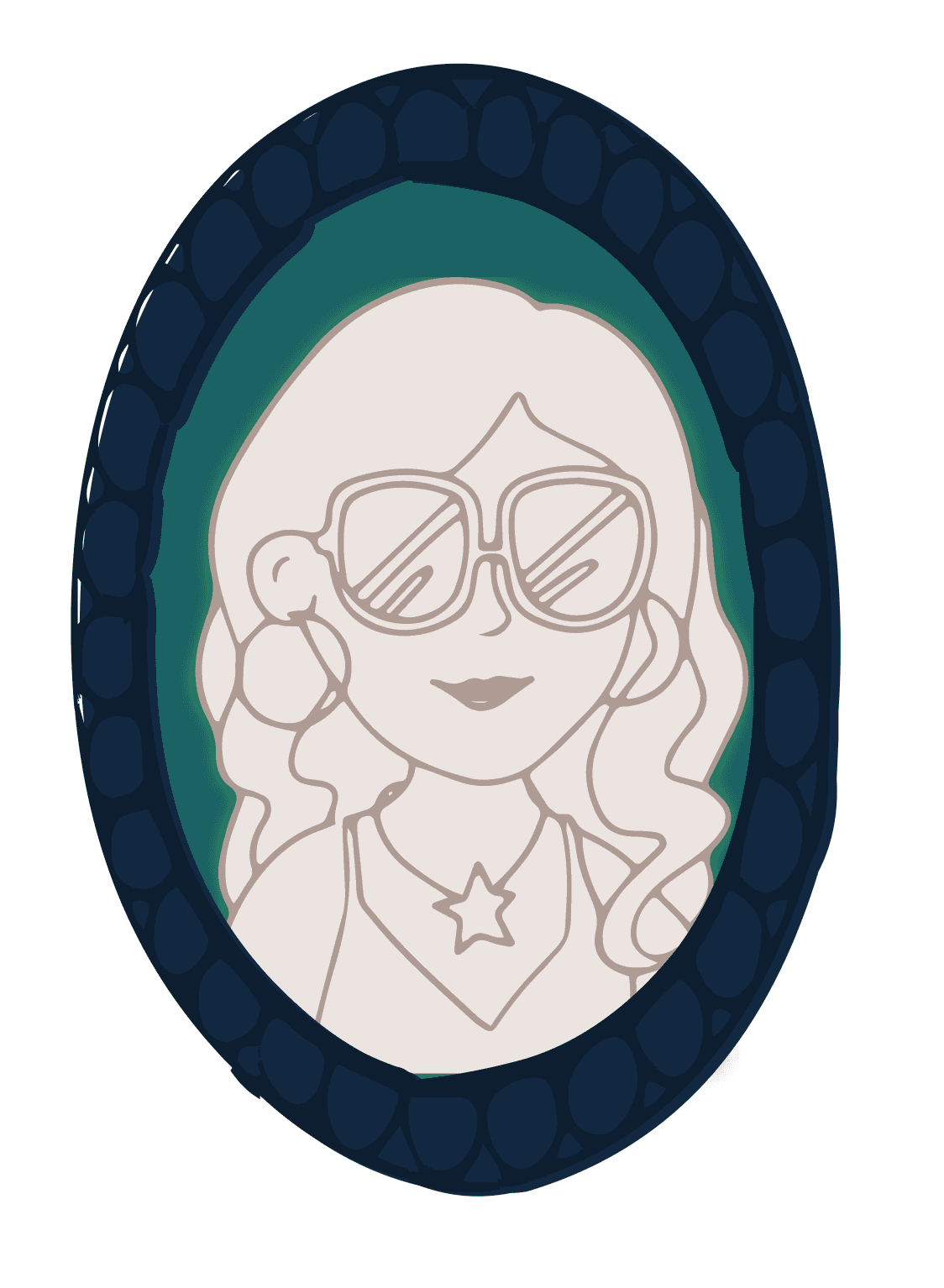
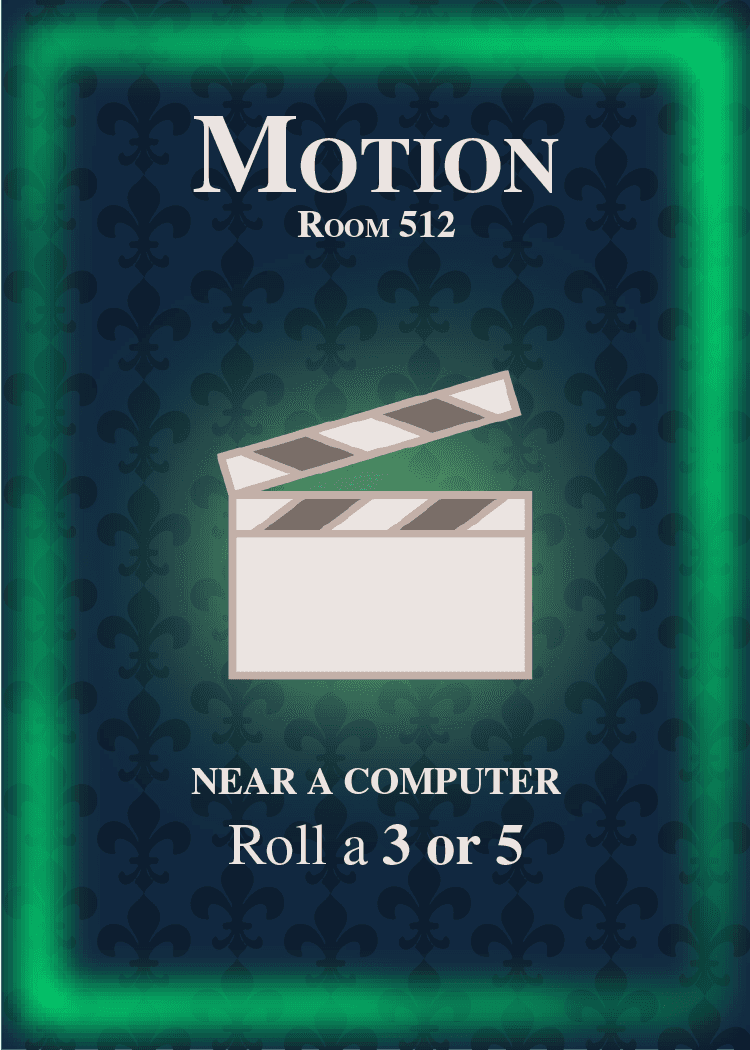
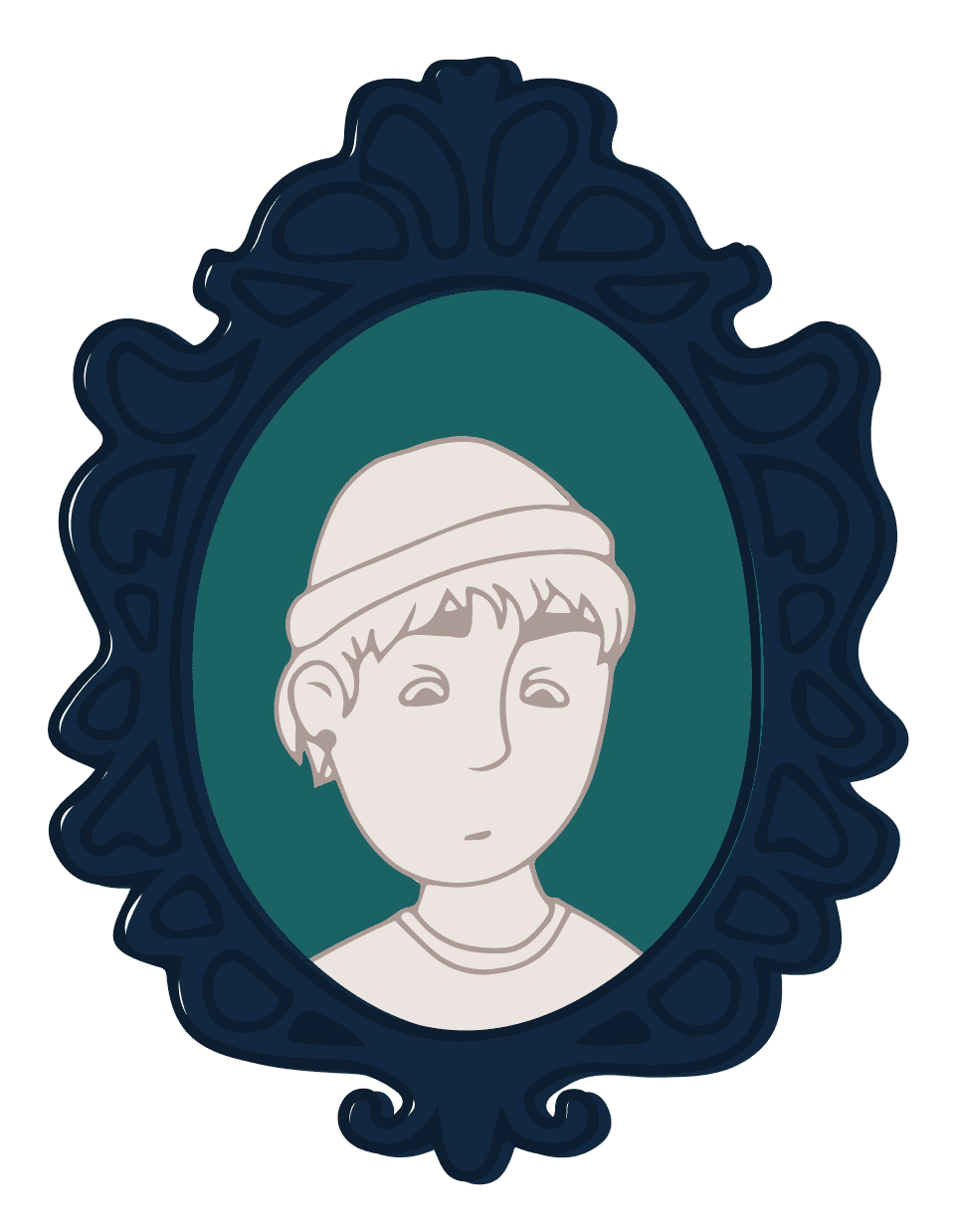
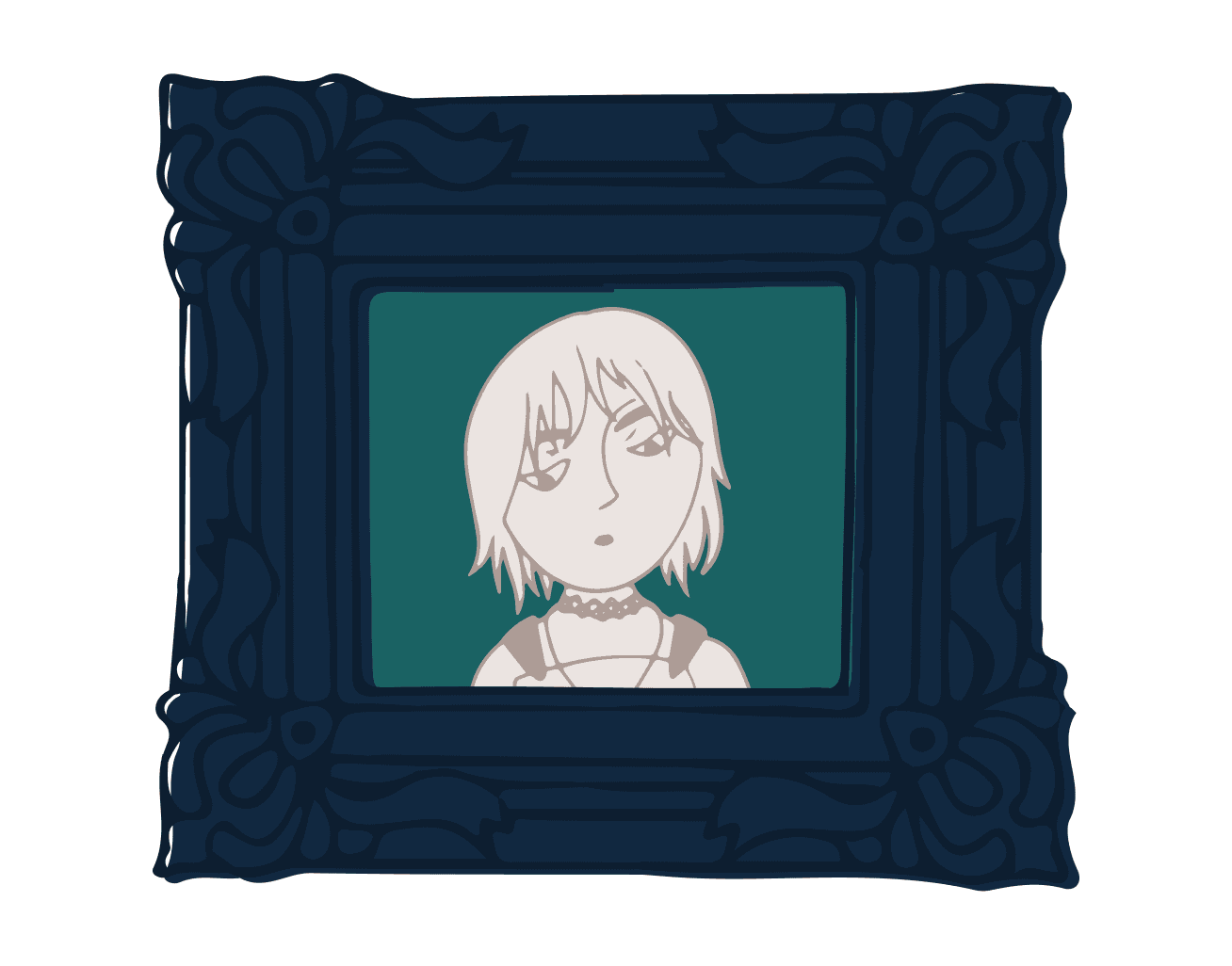
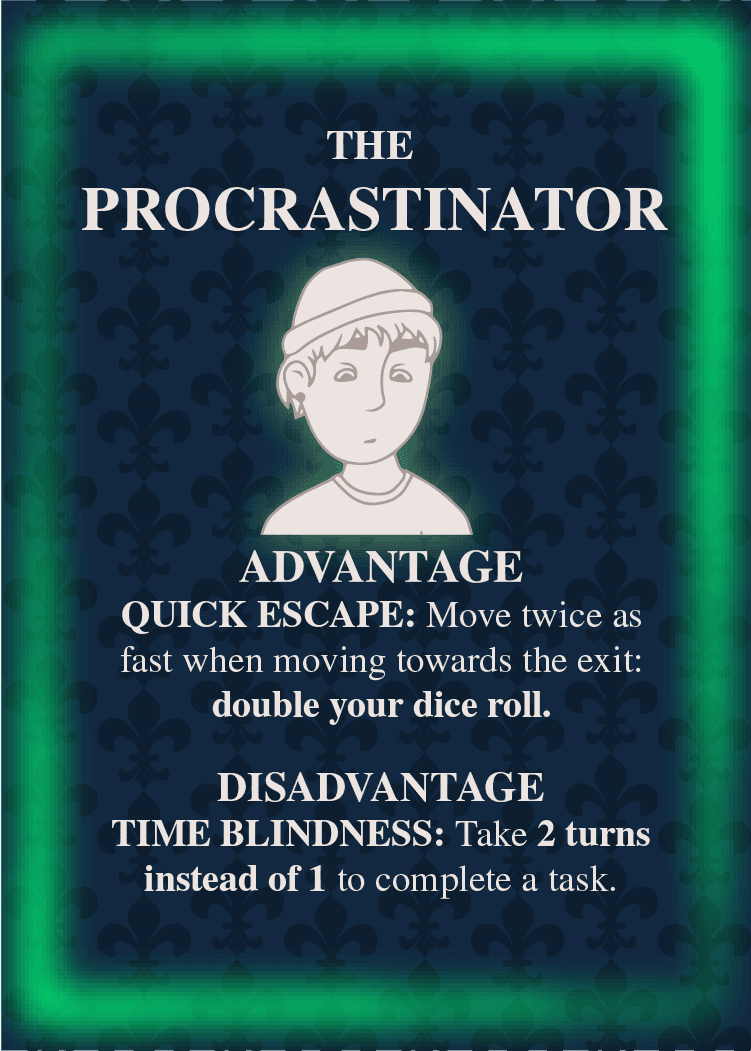
A few of our character and task cards. Cards designed by Miles Ainsworth.
Laying down the floor plan
Our first board prototype used paper and modular rooms to allow us to fine-tune spacing and sizing before committing to anything.
Each room reflected the real floor plan at a simplified scale.
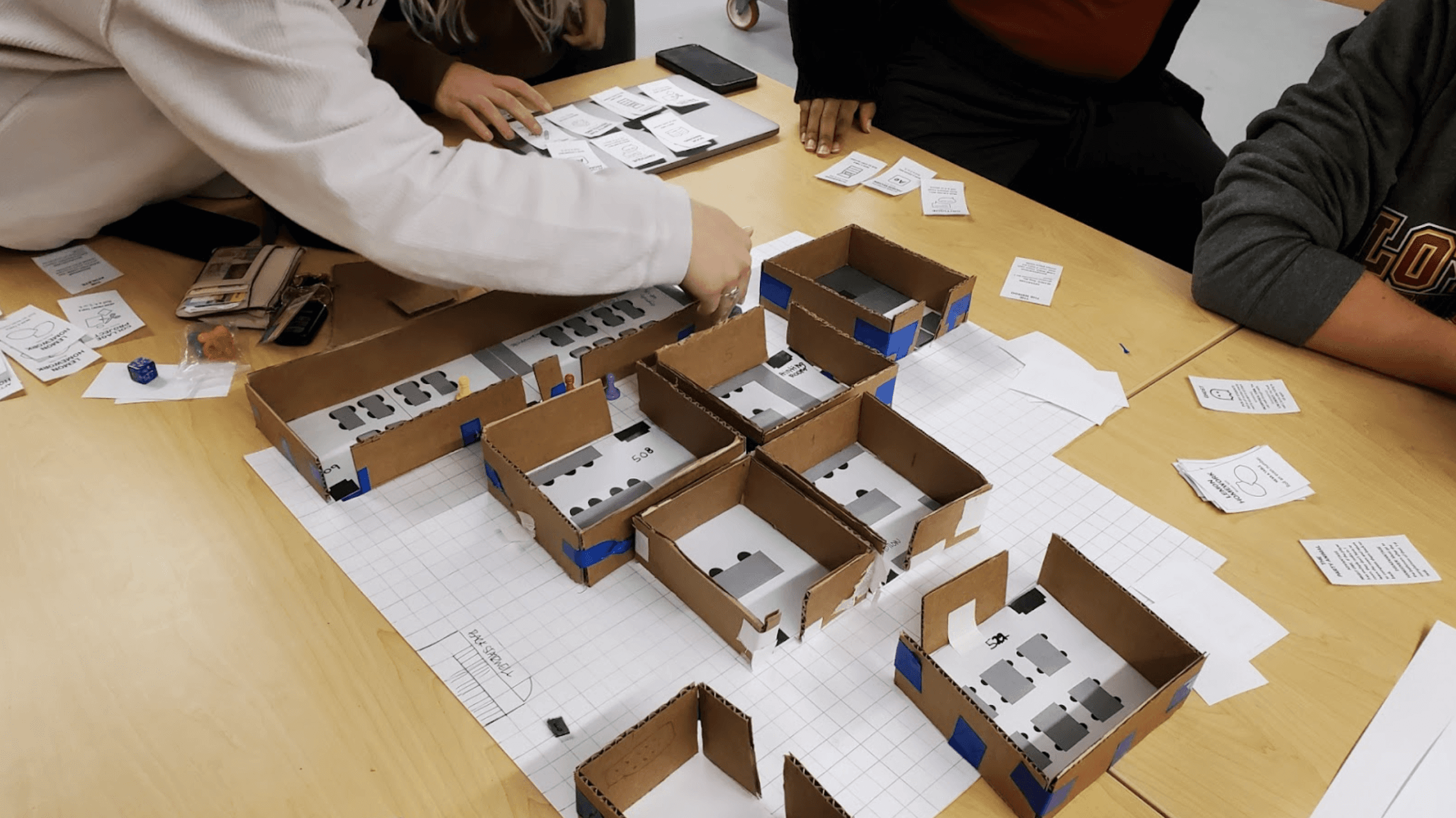
Playtesting low-fidelity prototype
We realized that players took way too long to cross the board with the size of our spaces. There were too many spaces for moving pawns with a dice roll method, and it slowed gameplay.
For the next board version, we reduced the spaces by making each individual square larger, allowing gameplay to maintain momentum with pawn movement.
Larger and few spaces allow pawns to move faster across the board.
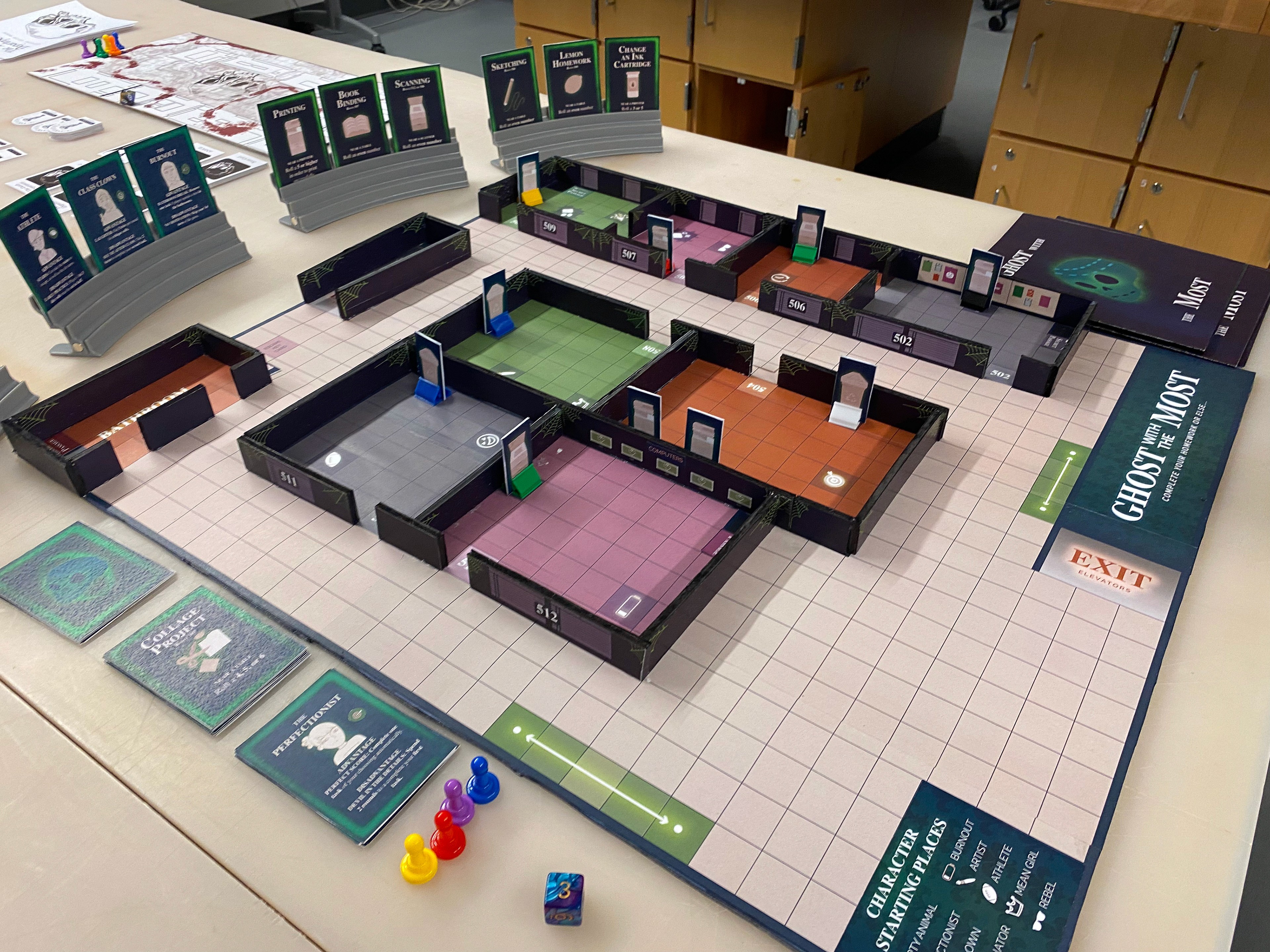
After a few pilot tests, we moved to construct the final board out of 24” x 28” foam core and applied our paper graphics.
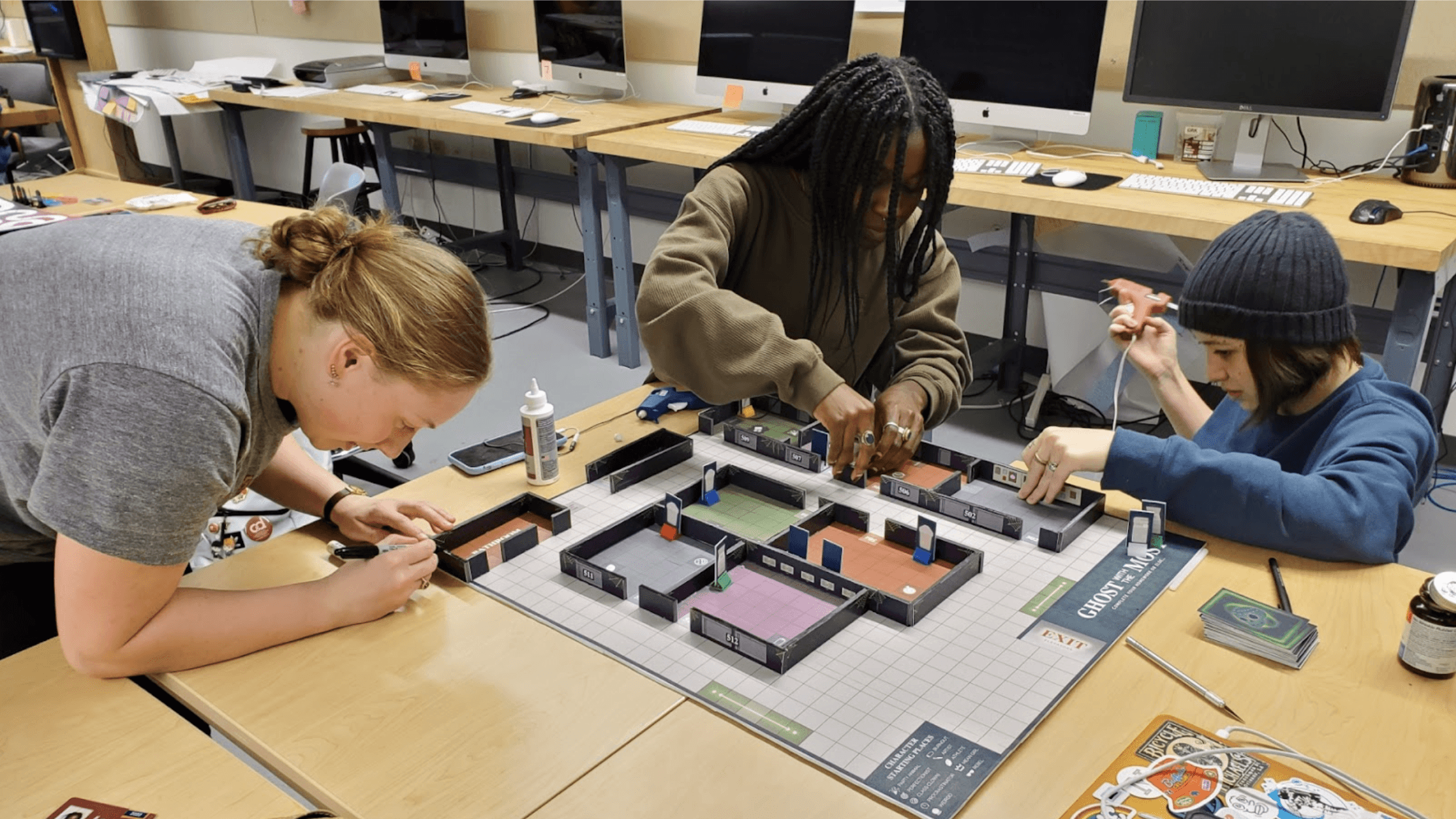
Our group creating the high-fidelity prototype.
Game Dynamics: The Basics
How to Play
Upon the game’s start, players select a student avatar and are dealt task assignment cards, with one ghost "task" card hidden among them.
Students must complete their homework to survive as a game
Student players maneuver around the board to complete their assignments and eventually escape through an exit without being “killed” by a ghost.
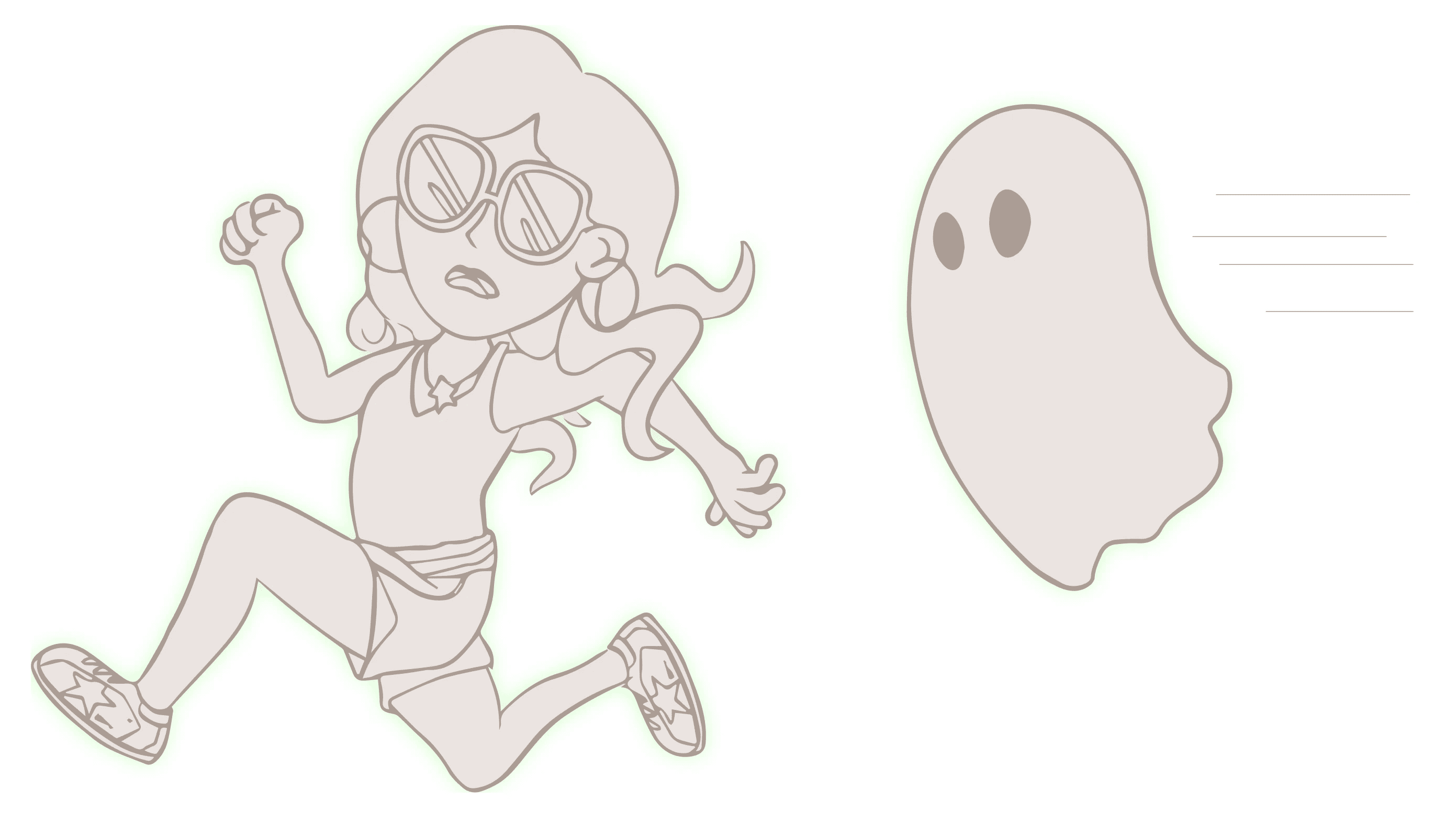
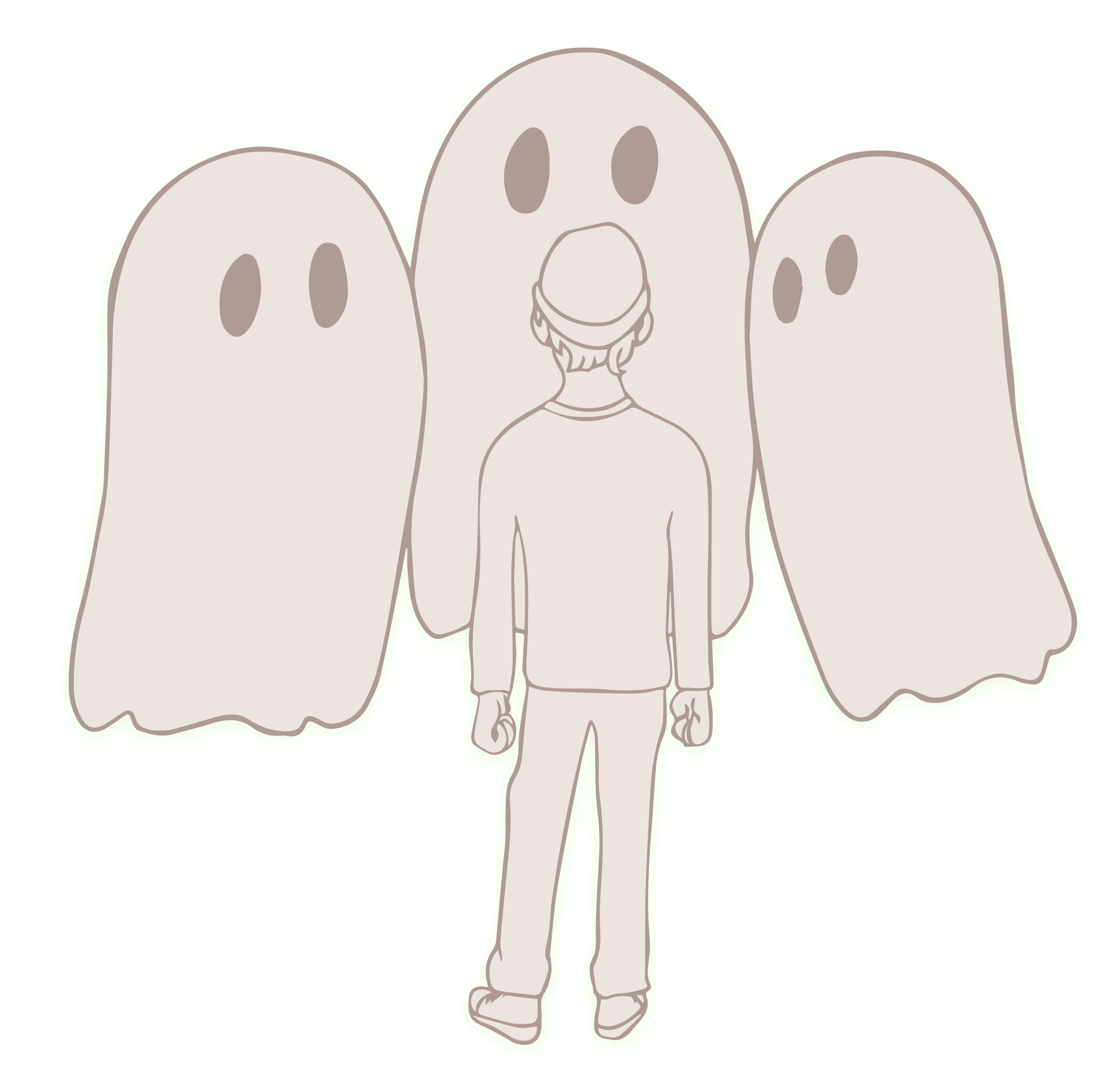
Ghosts must have students eternally on the 5th floor, dead or alive
Ghost players must chase and eliminate all the students before they escape the floor, one by one.
When a ghost “kills” a student, they’re resurrected, not as a student but as a ghost player. Then, all of the phantom players work together to eliminate the remaining students.
Playtesting
Adjustments for a more intuitive and efficient gameplay
With lots of yelling and laughing in playtests, it became obvious that students enjoyed the game, but they showed two main areas for improvement.
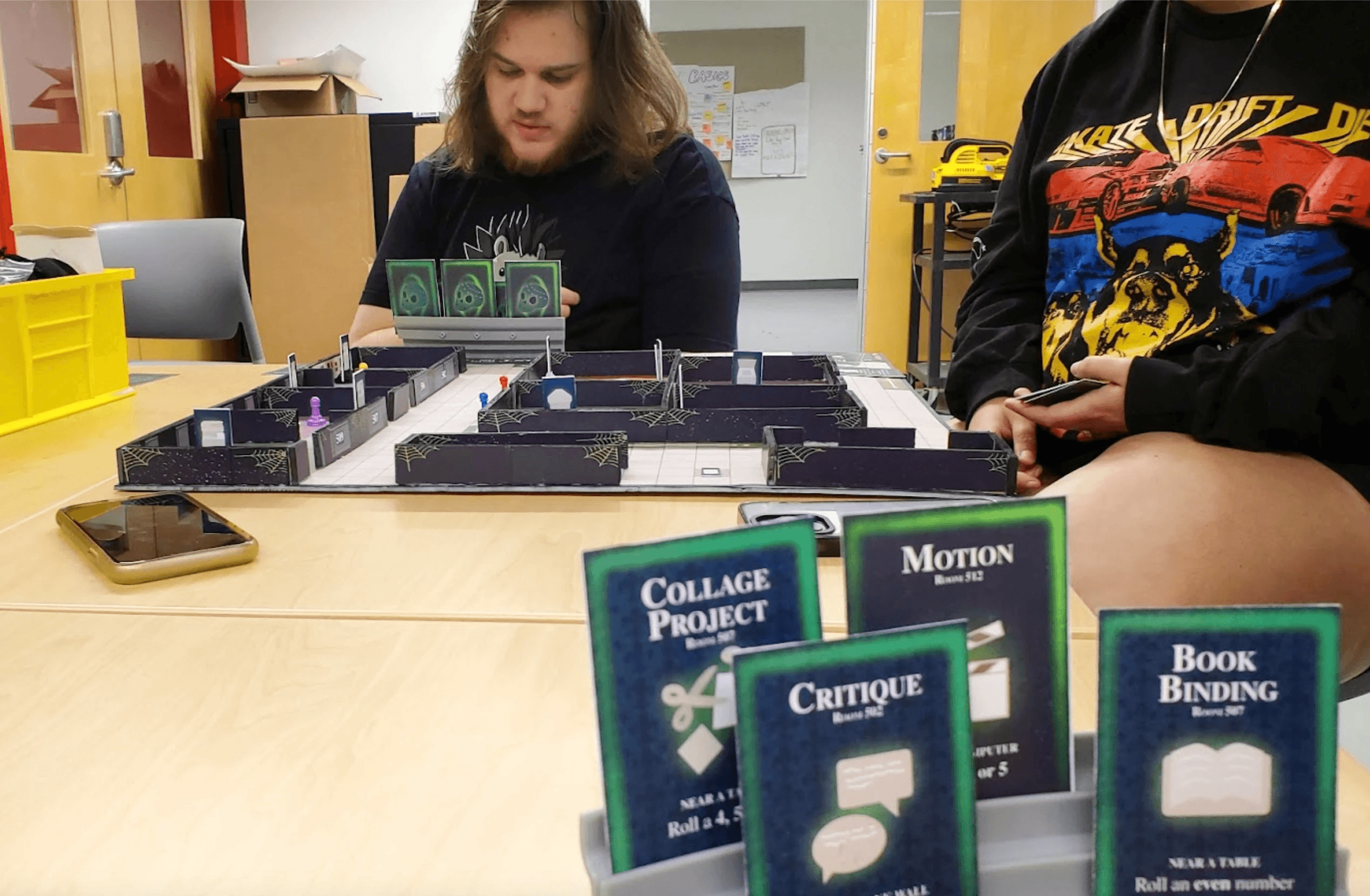
Our group creating the high-fidelity prototype.
Ghosts players were too powerful
Without having to complete tasks, ghost players could easily eliminate students, ending the game before anyone could escape. Student secret passageways were added to balance power distribution.
Matching characters with starting icons
Avatars were each assigned a starting point marked by a matching icon. Feedback showed some pairings were unclear, so we reworked the icons to make each match intuitive.
Adding a Game Manual & Simplifying Game Rules
Although it wasn't in the original scope of the project, we created a short instruction manual covering all game mechanics and rules because our rules were lengthy and complex. Some rules were also reworded with simpler language for less player confusion.
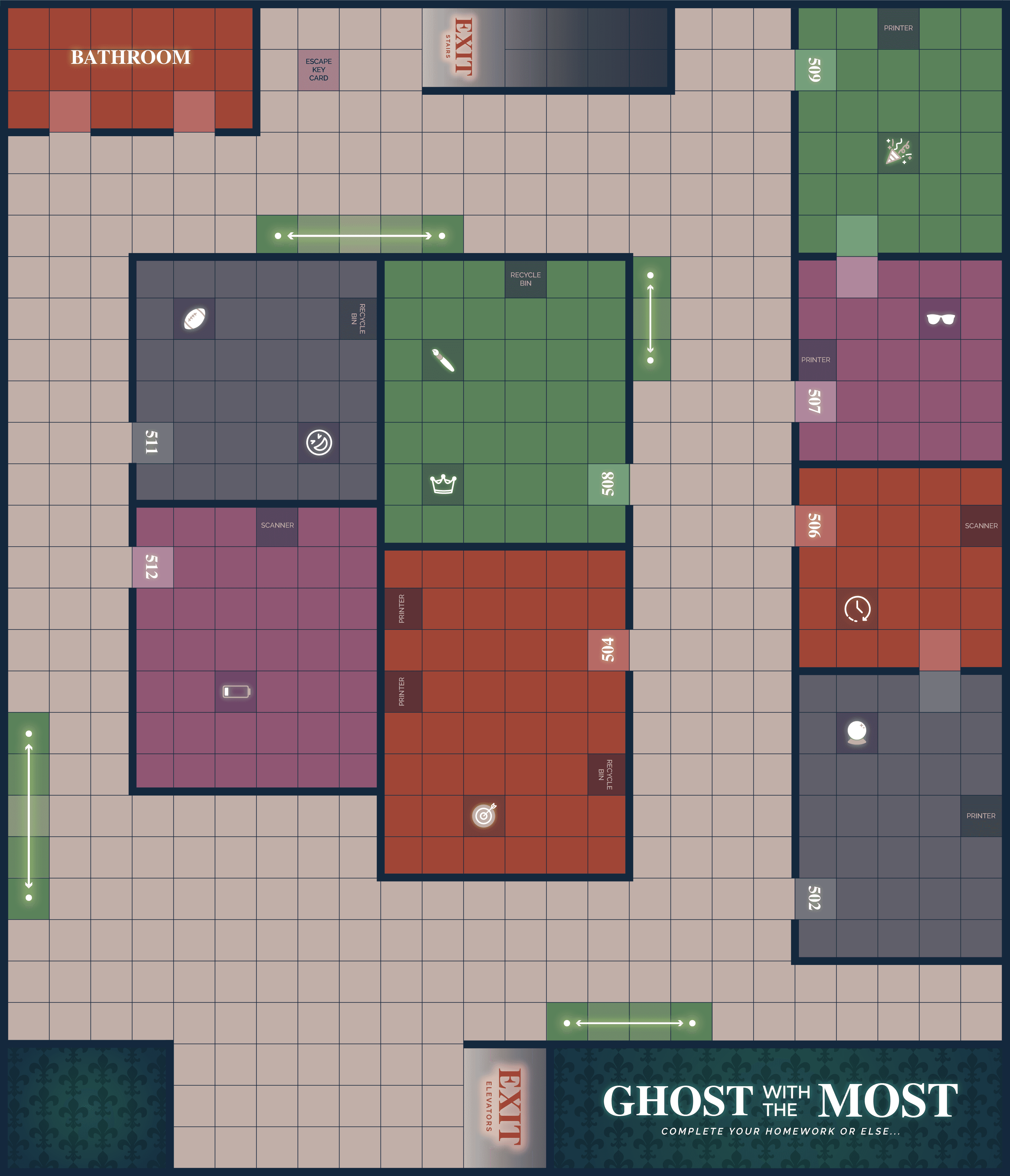
Final board design. Each space equivalent to 1 inch.
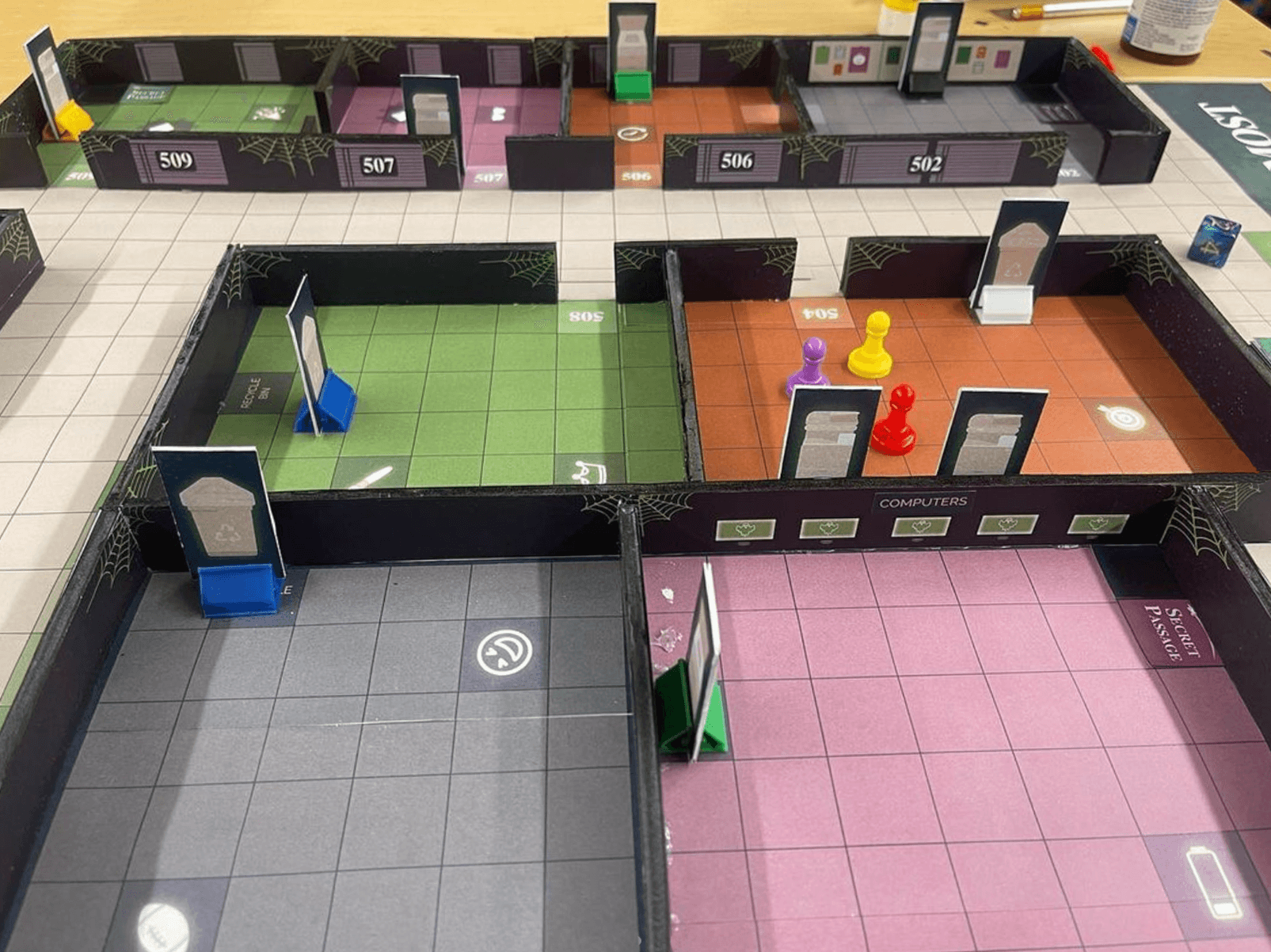
Close up of the final board.
What I Learned
Creating something functional is one type of challenge, but creating something truly enjoyable, that people actually want to play with joy and laughter, is an entirely different type of hard.
With our team, I’m happy to say that we succeeded in creating a game that gets people as fired up as UNO.
Still lookin'?
:)
© Ella Balhoff 2026